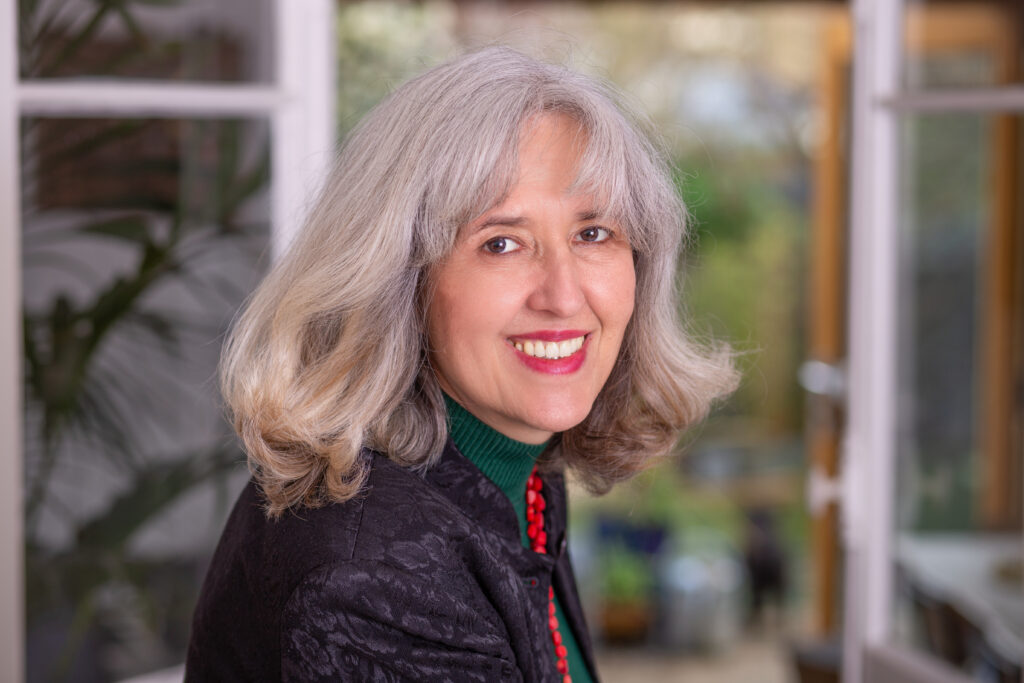
Hi, I’m Sherine Lovegrove
I am an accredited psychotherapist with a professional background spanning psychotherapy, nursing, midwifery, neuroscience and mind-body therapies.
But qualifications only tell you part of what you probably want to know about a therapist.
You may be wondering:
Will I feel comfortable talking to you?
Will you understand me?
Will you judge me?
And will we actually get somewhere?
These things matter to me too.
I believe there is always a reason we become the way we are
Over the years, I have sat with people who are anxious, grieving, angry, frightened, disconnected, overwhelmed or simply exhausted from trying to hold everything together.
Again and again, I have seen that behaviours which can look problematic on the surface often make much more sense when we understand what lies underneath them.
The person who can’t say no may have learnt that keeping other people happy kept relationships safe.
The person who struggles to rely on anyone may have learnt very early that being independent was safer.
The perfectionist may have learnt that getting things right brought approval, belonging or protection from criticism.
I don’t begin by asking:
“What’s wrong with you?”
I’m much more interested in:
“What happened, what did you learn from it, and what are you still carrying that you may no longer need?”
That curiosity sits at the heart of how I work.
My journey into psychotherapy
My professional life began in nursing and midwifery, including working within intensive care.
Those early experiences taught me something that has remained with me throughout my career: we cannot easily separate the mind from the body, or the person from what is happening in their life.
I became increasingly interested in why two people could experience apparently similar circumstances yet respond very differently.
Why do some experiences stay with us?
Why can we understand something intellectually yet still find ourselves repeating it?
Why does the body sometimes react before the thinking mind has caught up?
Those questions eventually led me more deeply into psychotherapy, mind-body approaches and the study of neuroscience and neuroplasticity.
Today, all of those strands inform the way I work.
I won’t expect you to leave parts of yourself at the door
Some people want therapy to be practical and grounded.
Others want to explore deeper questions about identity, meaning, relationships or the experiences that have shaped them.
Many need both.
You don’t need to speak in therapeutic language, and you don’t need to arrive knowing exactly what you want from therapy.
I will meet you where you are.
There may be laughter as well as tears. There may be things we gently challenge. There may be moments when something suddenly makes sense in a way it never has before.
Most importantly, therapy should feel like somewhere you can increasingly be yourself — rather than somewhere else you have to perform, please or get things right.
My professional background
My training and experience include psychotherapy, nursing, midwifery, cognitive neuroscience and a range of trauma-informed and mind-body therapeutic approaches.
I have particular experience supporting people with anxiety, trauma, relationship and attachment difficulties, grief and loss, self-worth, people-pleasing and perfectionism, as well as the psychological transitions surrounding pregnancy, birth and becoming a parent.
My varied background allows me to look at what you are experiencing from more than one perspective while keeping you, rather than a particular therapeutic method, at the centre of our work.
Perhaps the most important thing to know about me
I don’t believe my role is to turn you into the person I think you should be.
My role is to help you understand yourself more deeply, recognise what may be keeping you stuck and create enough space for different choices to become possible.
Because sometimes change isn’t about becoming somebody else.
It is about finally having the freedom to be more fully yourself.
Feel more like yourself again
If what you’ve read feels familiar, we can begin with a conversation.
[Arrange an initial conversation]